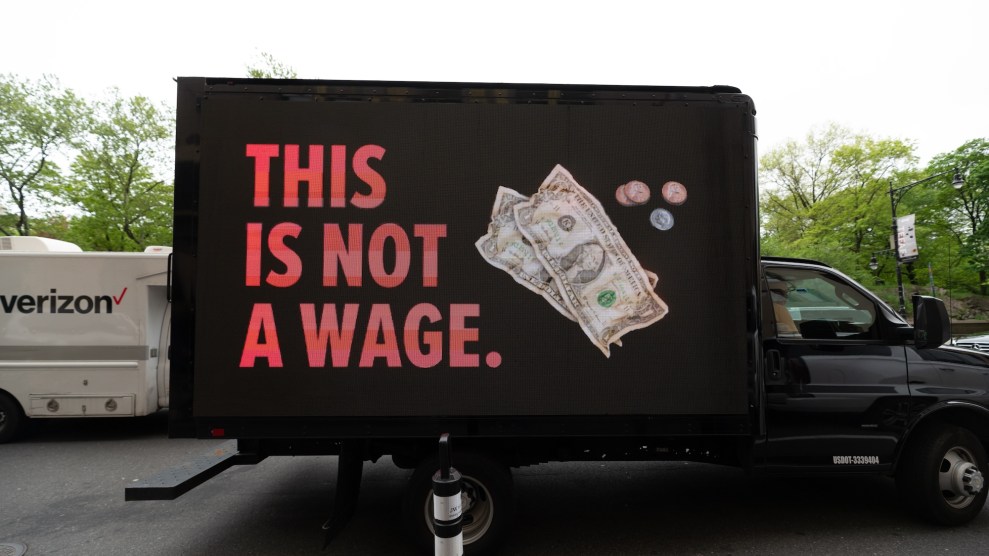
Workers advocate a minimum wage rise at a 2022 rally in New York.Noam Galai/Getty
When the Fair Labor Standards Act was signed into law in 1938, first establishing a national minimum wage, it came with an exemption: employers could pay some disabled workers less than minimum wage. The federal exemption still stands, even as many states roll back their versions—and that wage can still be as little as 25 cents an hour.
25 states have since introduced or enacted legislation to phase out this outdated practice. Defenders of the 14(c) certificate program often argue that the disabled workers it covers, most of whom have intellectual and developmental disabilities, just wouldn’t get a job elsewhere.
A study published today in JAMA Health Forum by University of Pennsylvania researchers refutes that argument. Its authors found that in two states—New Hampshire and Maryland—that banned the practice, employment rates for adults with intellectual and developmental disabilities, such as people who are autistic, either increased or didn’t change when employers had to pay them an equal wage.
Neurologist Mihir Kakara, the study’s lead author, says the finding “points towards the fact that these people are able to work in equal-paying, fully integrated jobs as their peers who do not have a disability, given the right resources.”
Many employers paying disabled workers subminimum wage use so-called “sheltered workshops,” which have also been criticized by disability advocates, as they segregate disabled workers. Whether or not a state maintains the subminimum wage, workers with cognitive disabilities still work fewer hours overall, and are paid less than those without cognitive disabilities.
Notably, New Hampshire had no below-minimum-wage disabled workers at the time of its repeal, unlike Maryland—but the employment rate for people with intellectual and developmental disabilities still increased when the state legally kicked the exemption to the curb. The researchers theorize that “media coverage and debates around Section 14(c) repeal might encourage or signal to families and individuals with [intellectual and development disabilities] previously out of the labor force to apply for employment training.”
While the Biden Department of Labor was expected to introduce a rule to either make the program more equitable or get rid of it entirely, it has yet to take action. For now, paying a worker less than minimum wage because they’re in a protected class remains, in many states, entirely legal.