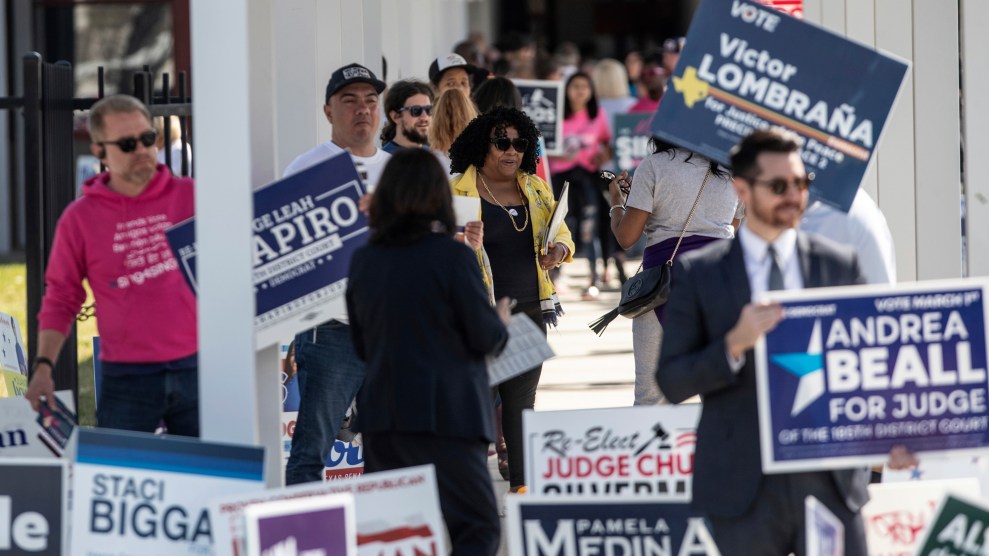
Voters outside a polling place in Houston, casting ballots in the March 1, 2022, primary elections.Marie D. De Jesús/Houston Chronicle via AP
The GOP’s effort to suppress the vote in Texas caused a substantial hike in the number of rejected mail-in ballots during this month’s primary election, according to two separate new analyses conducted by the New York Times and the Associated Press.
The Times‘s focused on rejection rates in the state’s 13 most populous counties and found that more than 18,000 voters had their mail-in votes thrown out. The AP’s broader analysis, incorporating data from 187 counties (roughly 85 percent of all primary voters), found that 23,000 ballots were rejected.
According to the Times, the rejection rate in the most populous counties was roughly 15 percent, a staggering increase from the 2020 election, where the statewide rejection rate was roughly one percent. The AP found that roughly 13 percent of ballots cast in the primary had been discarded. Voting experts told the AP that a rejection rate over two percent is typically “cause for attention.”
Particularly troubling: In Harris County, the state’s most populous county, which includes Houston, the restrictions disproportionately targeted Black voters, a result which conformed to the predictions of voting rights advocates. Six of the nine ZIP codes in Harris County with the most ballot rejections were majority Black.
While the Times noted that it was difficult to assess whether a particular party benefited from the new restrictions, it found that the rejection rate in Harris County was higher for Republicans than for Democrats. Overall, however, the AP found a partisan skew to the discarded ballots, noting that the rejection rate in Democratic-leaning counties was 15.1 percent, while the rate in Republican-leaning ones was 9.1 percent.
According to the New York Times, the “vast majority of ballots were rejected because of rules set last year that required voters to provide their driver’s license number or partial Social Security number.” Many rejected voters either failed to provide an identification number or provided one that didn’t match the number on file.
The two analyses constitute the clearest evidence yet that the GOP’s efforts to restrict the vote have already begun to bear fruit. Last year, the Texas Legislature passed a sweeping set of voting bills that led the state’s Democratic representatives to literally flee the state in a last-ditch and ultimately unsuccessful effort to prevent their passage. The bills banned voting options that Democratic counties in Texas had enacted to ease the difficulty of voting during a pandemic, including drive-through and 24-hour voting. They also set new ID requirements for mail voting, empowered partisan poll watchers, and prohibited election officials from sending out ballot request forms or advertising vote-by-mail.