Don’t Burn the Crops

NASA

Get your news from a source that’s not owned and controlled by oligarchs. Sign up for the free Mother Jones Daily.


Want a quick recipe for reducing Arctic ice melt fast? Stop burning northern hemisphere farmlands and pasturelands.

New research finds that large-scale agricultural burning in Russia, Kazakhstan, China, the US, Canada, and the Ukraine is melting Arctic ice.

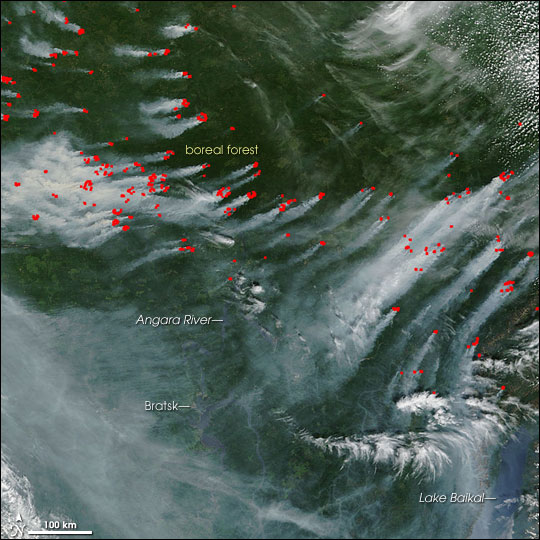
The big contributor: Spring burning, when farmers torch crop residues and brush to clear new land for crops and livestock. The black carbon soot produced by these fires flows north, warms the surrounding air, and absorbs solar energy when it falls on ice and snow.

How bad is the problem? Springtime burning may account for 30 percent of Arctic warming to date.

The good news is there’s an easy fix. Targeting these burns gets us a genuinely fast reduction in temperature over the Arctic. Plus we know how to control these pollutants right now. Just stop burning. Right now. Before the melting ice rewires the oceanic currents delivering us the climate we’re used to.

The research is part of POLARCAT, an international effort to track the transport of pollutants into the Arctic from lower latitudes. Researchers were surprised to find 50 smoke plumes that analysis of satellite images revealed came from agricultural fires in Northern Kazakhstan and Southern Russia and from forest fires in Southern Siberia. The emissions from these fires far outweighed those from fossil fuels.

“These fires weren’t part of our standard predictions, they weren’t in our models,” says Daniel Jacob, a professor of atmospheric chemistry and environmental engineering at Harvard.

Although global warming is largely the result of excess accumulation of carbon dioxide, the Arctic is highly sensitive to short-lived pollutants like black carbon. Forest fires, agricultural burning, primitive cookstoves, and diesel fuel are the primary sources of black carbon.


BEFORE YOU CLICK AWAY!

December is make or break for us. A full one-third of our annual fundraising comes in this month alone. A strong December means our newsroom is on the beat and reporting at full strength. A weak one means budget cuts and hard choices ahead.

The December 31 deadline is closing in fast. To reach our $400,000 goal, we need readers who’ve never given before to join the ranks of MoJo donors. And we need our steadfast supporters to give again today—any amount.

Managing an independent, nonprofit newsroom is staggeringly hard. There’s no cushion in our budget—no backup revenue, no corporate safety net. We can’t afford to fall short, and we can’t rely on corporations or deep-pocketed interests to fund the fierce, investigative journalism Mother Jones exists to do.

That’s why we need you right now. Please chip in to help close the gap.

BEFORE YOU CLICK AWAY!

December is make or break for us. A full one-third of our annual fundraising comes in this month alone. A strong December means our newsroom is on the beat and reporting at full strength. A weak one means budget cuts and hard choices ahead.

The December 31 deadline is closing in fast. To reach our $400,000 goal, we need readers who’ve never given before to join the ranks of MoJo donors. And we need our steadfast supporters to give again today—any amount.

Managing an independent, nonprofit newsroom is staggeringly hard. There’s no cushion in our budget—no backup revenue, no corporate safety net. We can’t afford to fall short, and we can’t rely on corporations or deep-pocketed interests to fund the fierce, investigative journalism Mother Jones exists to do.

That’s why we need you right now. Please chip in to help close the gap.

We Recommend

Latest

Sign up for our free newsletter

Subscribe to the Mother Jones Daily to have our top stories delivered directly to your inbox.

Get our award-winning magazine

Save big on a full year of investigations, ideas, and insights.

Subscribe

Support our journalism

Help Mother Jones' reporters dig deep with a tax-deductible donation.

Donate