Here’s a Textbook Criticism of Econometrics Gone Bad

A couple of weeks ago I linked to a study that suggested the anti-overdose drug Nalexone might, on net, actually cause more opioid deaths. I was skeptical because the data seemed to show no real pattern. The authors drew a dashed red line at the point where Nalexone was legalized, and sure enough, it looked like opioid deaths jumped after the new laws were passed. But the line seemed entirely arbitrary.

Now Andrew Gelman has weighed in. He has pretty much the same criticisms I did, but he also has the statistical chops to be taken seriously. However, he also links to Richard Border, who doesn’t say a word but lets the numbers speak for themselves:
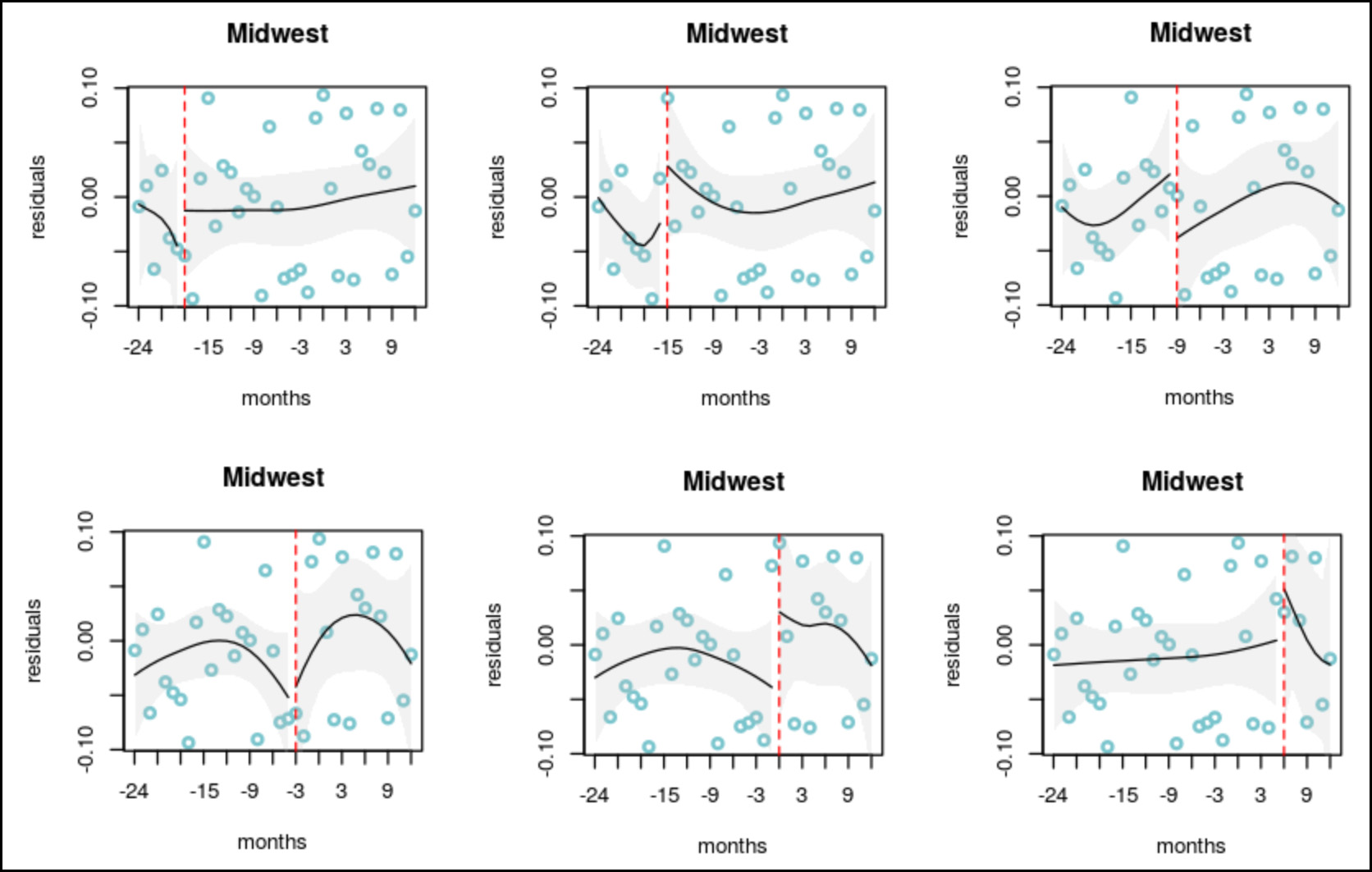
This is a textbook criticism of statistics based on too few data points. As Border shows, you can put the cutoff line anywhere and it looks like there’s a big jump in opioid deaths. But that doesn’t mean anything. The error bars are enormous, and the before-and-after “trends” are meaningless.

I’d add that this also shows the value of simply using common sense. If you remove all the lines and the error bars and simply look at the scatterplot, there’s nothing there. That should make you skeptical from the very start. It’s true that occasionally you can tease real results out of data like this, but you’d better be damn sure of what you’re doing and you’d better check it ten different ways. The authors of this study didn’t do that.

BEFORE YOU CLICK AWAY!

December is make or break for us. A full one-third of our annual fundraising comes in this month alone. A strong December means our newsroom is on the beat and reporting at full strength. A weak one means budget cuts and hard choices ahead.

The December 31 deadline is closing in fast. To reach our $400,000 goal, we need readers who’ve never given before to join the ranks of MoJo donors. And we need our steadfast supporters to give again today—any amount.

Managing an independent, nonprofit newsroom is staggeringly hard. There’s no cushion in our budget—no backup revenue, no corporate safety net. We can’t afford to fall short, and we can’t rely on corporations or deep-pocketed interests to fund the fierce, investigative journalism Mother Jones exists to do.

That’s why we need you right now. Please chip in to help close the gap.

BEFORE YOU CLICK AWAY!

December is make or break for us. A full one-third of our annual fundraising comes in this month alone. A strong December means our newsroom is on the beat and reporting at full strength. A weak one means budget cuts and hard choices ahead.

The December 31 deadline is closing in fast. To reach our $400,000 goal, we need readers who’ve never given before to join the ranks of MoJo donors. And we need our steadfast supporters to give again today—any amount.

Managing an independent, nonprofit newsroom is staggeringly hard. There’s no cushion in our budget—no backup revenue, no corporate safety net. We can’t afford to fall short, and we can’t rely on corporations or deep-pocketed interests to fund the fierce, investigative journalism Mother Jones exists to do.

That’s why we need you right now. Please chip in to help close the gap.

We Recommend

Latest

Sign up for our free newsletter

Subscribe to the Mother Jones Daily to have our top stories delivered directly to your inbox.

Get our award-winning magazine

Save big on a full year of investigations, ideas, and insights.

Subscribe

Support our journalism

Help Mother Jones' reporters dig deep with a tax-deductible donation.

Donate