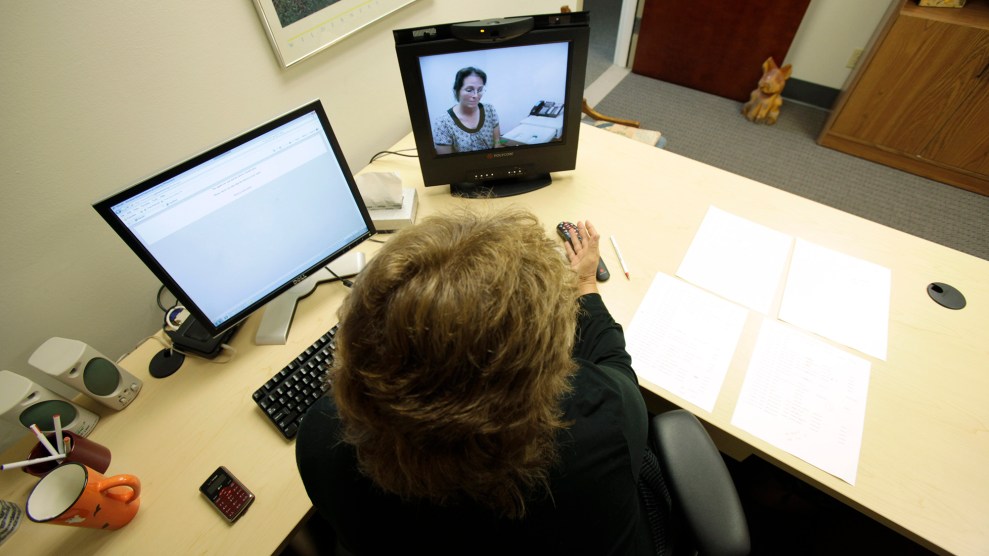

Telemedicine—in which doctors administer medication via webcam and a remotely-controlled drawer—has become an easy target for anti-abortion legislators who try to claim it is dangerous and limits physician oversight. But the coronavirus pandemic highlights precisely why access to medication abortion through telemedicine is so crucial.
And now, abortion providers and advocates are calling for states to suspend bans on telemedicine in cases of medication abortion.
There’s the obvious social distancing it allows (though states have different regulations regarding where telemedicine appointments can take place and who must be present to preside over them). But Dr. Daniel Grossman, the director of the research group Advancing New Standards in Reproductive Health, points out another key, though less readily apparent benefit: In a pandemic, hospitals in particular are forced to prioritize infected patients, which may mean abortion care gets de-prioritized, despite the time-sensitive nature of the procedure. Telemedicine allows abortion providers to bridge the gap.
In an interview, Grossman called telemedicine “the perfect solution” for women looking to terminate early pregnancies. “Unfortunately, it’s burdened by the restrictions in 18 states that completely ban telemedicine abortion care and then it’s also restricted due to the risk evaluation and mitigation strategy for mifepristone, which limits the possibility of doing direct to patient telemedicine,” Grossman said, referencing the Food and Drug Administration’s classification of mifepristone, the first of two medications taken to induce abortion, as a high-risk drug, despite its extraordinarily high safety profile.
Telemedicine is a great innovation that ensures more patients are able to get the care they need, but because it has that power, that's why they're specifically banning the use of it for abortion, despite it being just as safe: https://t.co/KJ05IRObpt
— Dr. Daniel Grossman (@DrDGrossman) March 12, 2020
Dr. Ghazelah Moayedi, an abortion provider in Texas, echoes this broad sentiment: “We should be moving anything we can to telemedicine right now.” Anything that requires unnecessary human contact should be suspended, she says—which also includes some of the onerous regulations surrounding abortion, including the 24-to-72-hour waiting period restrictions that require a pregnant person to attend two appointments with the same provider over some number of days.
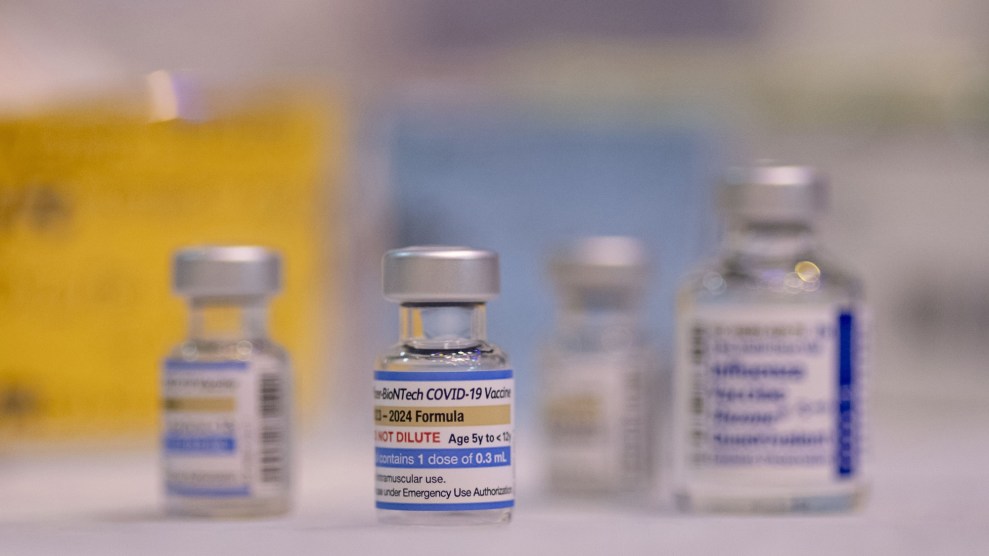
Now is the time for states to recognize the safety of both telemedicine for abortion care, as well as medication abortion itself. Medication abortion, which is approved for patients who are up to 10 weeks pregnant, accounts for approximately 40 percent of abortion procedures and has a more than 95 percent success rate when used correctly. Serious complications occur in fewer than 0.4 percent of cases. As I reported at the time, a 2017 study found that telemedicine for abortion care is just as safe as in-person visits; it also increased access to medication abortion for rural pregnant people in Iowa, which meant fewer abortions later in pregnancy.
Still, telemedicine bans in abortion care are often justified with claims that it’s not safe. Unfortunately, following the lead of the 18 states Grossman referenced, Ohio is currently considering its own ban on telemedicine abortion care.
Meanwhile, in Texas, Gov. Greg Abbott lifted restrictions on telemedicine in the state over the weekend—but the rule does not apply to abortion care.