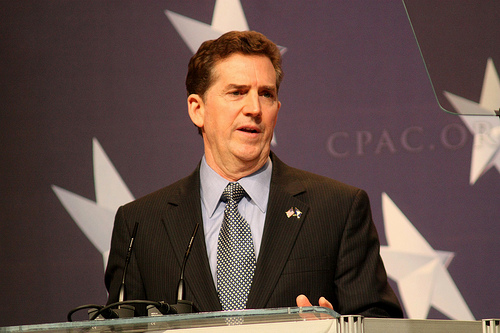
Sen. Jim DeMint (R-SC) speaks at the 2010 CPAC conference. Flickr/<a href="http://www.flickr.com/photos/gageskidmore/4392631687/">Gage Skidmore</a>
This week, the number of amendments seeking to improve or gut or merely tweak the Senate’s financial reform bill has gone from a trickle to a pour. A few days into the full debate, at least 125 amendments have been offered, ranging from a major kneecapping of the bill’s Consumer Financial Protection Bureau to setting caps on the size of banks and the amount of leverage they can use. As expected, nearly all of the amendments to the Senate’s financial bill concern, well, financial regulation. A few, however, don’t, having only the most tenuous connection to fixing Wall Street—if they have any connection at all.
Like South Carolina senator Jim DeMint’s amendment that would require the completion of a 700-mile, double-layered fence along the US-Mexico border. DeMint announced yesterday that he was planning to introduce the border fence amendment because Democrats, and especially the Obama administration, had backed out on their pledge to finish the fence, he claimed. “We’ve had rhetoric and promises for four years without results,” DeMint said in a statement. “It’s time we completed the fence and secured our borders to protect American citizens.” What the border fence has to do with financial reform is unclear: There’s no mention of financial reform in DeMint’s statement announcing the amendment, and a call requesting comment from his office wasn’t immediately returned.
Following in DeMint’s footsteps is Sen. Sam Brownback (R-Kan.), who is planning to introduce an amendment relating to conflict minerals obtained from the Congo. While all the details on Brownback’s amendment aren’t available, odds are it will mirror past legislative efforts by Brownback to “brin[g] accountability and transparency to the supply chain of minerals used in the manufacturing of many electronic devices.” Brownback has been a prominent voice in Congress on the issue of buying minerals from the Congo. He wants the Securities and Exchange Commission to take on the role of increasing transparency and disclosure in the mineral trade. To that effect, he co-sponsored a previous bill, the Congo Conflict Minerals Act of 2009, but the bill never made it out of committee. Again, the connection between disclosure of conflict minerals (a human rights issue, really) and financial regulatory reform seems weak. A call to Brownback’s office wasn’t immediately returned.