Rising Opioid Deaths: Is the Cause Economic Despair Or Skyrocketing Supply?

How much has the opioid epidemic been a response to poor economic conditions? Eric Levitz points us today to a new paper from Christopher Ruhm of the University of Virginia. He examined changes in economic conditions at the county level to see how much this explained the change in death rates from opioids. In order not to keep you in suspense, the answer is “not much”:
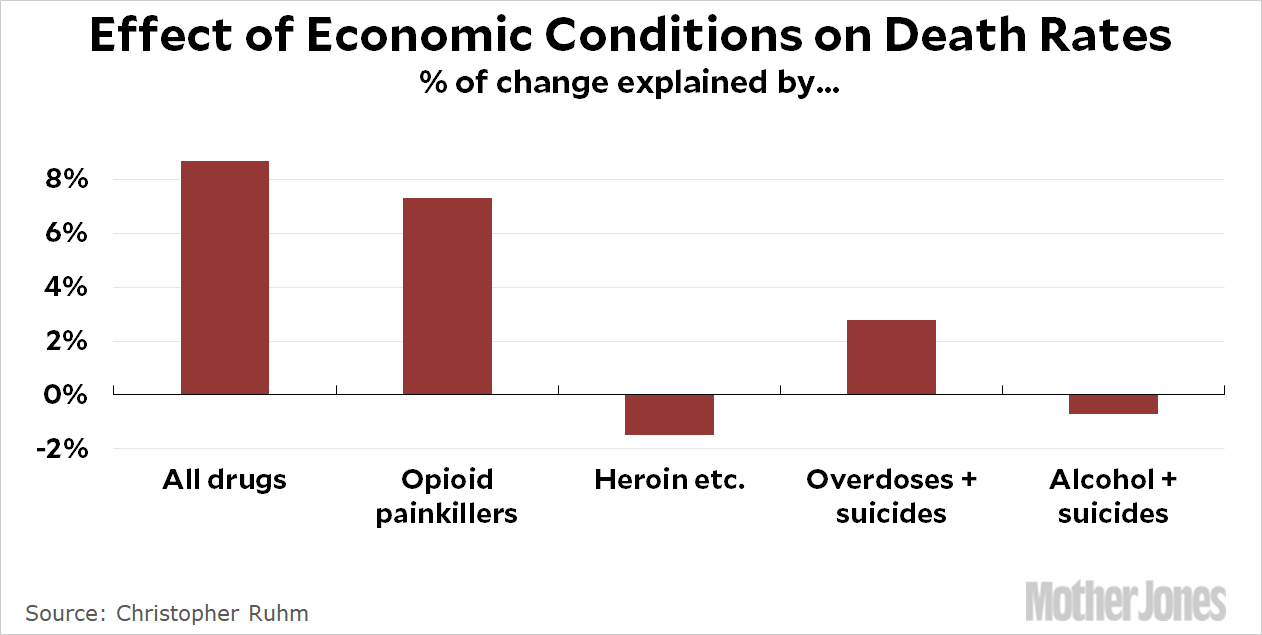
Economic conditions explained only 8 percent of the change in overdose deaths from all drugs and 7 percent of the change in deaths from opioid painkillers—and even that small effect probably goes away if you control for additional unobservable factors. It explained none of the change in deaths from heroin, fentanyl, and other illegal opioids. Ruhm comments:

These results suggest that the “deaths of despair” framing, while provocative, probably do not explain the main sources of the fatal drug epidemic and imply that efforts to improve economic conditions in distressed locations, while desirable for other reasons, are unlikely to yield significant reductions in drug mortality. Such results probably should not be surprising since drug fatalities increased substantially – including a rapid acceleration of illicit opioid deaths – after the end of the Great Recession (i.e. subsequent to 2009), when economic performance considerably improved.

Ruhm concludes that the real reason for the rise in deaths from opioids is simple: it’s because they were there. We’ve long known that illicit drugs are faddish—heroin in the 70s, cocaine in the 80s, marijuana in the 90s—and the fads depend a lot on which drugs are in wide supply. In this case, when the supply of OxyContin skyrocketed, so did overdose deaths from OxyContin. Ditto for fentanyl, the current scourge. Wait a decade and it will be something else.

BEFORE YOU CLICK AWAY!

December is make or break for us. A full one-third of our annual fundraising comes in this month alone. A strong December means our newsroom is on the beat and reporting at full strength. A weak one means budget cuts and hard choices ahead.

The December 31 deadline is closing in fast. To reach our $400,000 goal, we need readers who’ve never given before to join the ranks of MoJo donors. And we need our steadfast supporters to give again today—any amount.

Managing an independent, nonprofit newsroom is staggeringly hard. There’s no cushion in our budget—no backup revenue, no corporate safety net. We can’t afford to fall short, and we can’t rely on corporations or deep-pocketed interests to fund the fierce, investigative journalism Mother Jones exists to do.

That’s why we need you right now. Please chip in to help close the gap.

BEFORE YOU CLICK AWAY!

December is make or break for us. A full one-third of our annual fundraising comes in this month alone. A strong December means our newsroom is on the beat and reporting at full strength. A weak one means budget cuts and hard choices ahead.

The December 31 deadline is closing in fast. To reach our $400,000 goal, we need readers who’ve never given before to join the ranks of MoJo donors. And we need our steadfast supporters to give again today—any amount.

Managing an independent, nonprofit newsroom is staggeringly hard. There’s no cushion in our budget—no backup revenue, no corporate safety net. We can’t afford to fall short, and we can’t rely on corporations or deep-pocketed interests to fund the fierce, investigative journalism Mother Jones exists to do.

That’s why we need you right now. Please chip in to help close the gap.

We Recommend

Latest

Sign up for our free newsletter

Subscribe to the Mother Jones Daily to have our top stories delivered directly to your inbox.

Get our award-winning magazine

Save big on a full year of investigations, ideas, and insights.

Subscribe

Support our journalism

Help Mother Jones' reporters dig deep with a tax-deductible donation.

Donate