Confused about how to be a more environmentally savvy consumer? Don’t worry. So is everyone else.
A new study released today in New Scientist finds that there is little correlation between the companies that Americans think are environmentally friendly and those who are actually implementing environmentally sound practices. The magazine partnered with Earthsense, an environmental research company based in Syracuse, and Trucost, a London-based company that assesses environmental impact, to compare the perception versus the reality for more than 100 major corporations.
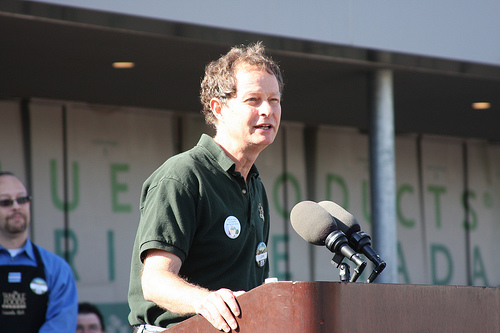
Whole Foods Market has the highest consumer “green” perception, though its green practices leave something to be desired, as I have noted here previously. They have done some notable things for the environment, like purchasing renewable energy, improving the efficiency of its refrigerators and reducing packaging. But they also have not disclosed their greenhouse gas emissions and other environmental data, making it hard to gage their overall impact. Thus, Trucost’s modeling rates Whole Foods “no better than conventional supermarkets such as Safeway.”
Food and beverage companies tend to have a higher overall impact due to the nature of the products they sell, though most consumers don’t recognize those impacts. The companies who are taking significant actions are also not recognized, like Coca-Cola, which had the second-lowest environmental impact among the food and drink producers in the study. Coca-Cola has instituted improved water efficiency into its processes, and is sourcing materials from suppliers who also use water more efficiently. While PepsiCo is taking similar steps, they have not disclosed data on their changes — which puts their impact at roughly twice that of Coca-Cola.
Google and eBay had the lowest actual environmental impact, though neither company has much of a green image. And for some companies, they found “dramatic mismatches between perceptions and reality.” One example they offer is Discovery Communications, whose impact isn’t much different from fellow communication giant Viacom. But Discover has a much better green reputation, likely because they feature programs like Animal Planet and own websites like TreeHugger and Planet Green.
Part of the issue, according to Earthsense co-founder Amy Hebard is that many companies who are doing green things aren’t touting them as much as they could, like due to fears that they will be seen as “greenwashing.” Meanwhile, companies who aren’t actually doing much apparently feel free to greenwash away, or at least benefit from consumer confusion.
But information on the actual impact of companies is improving, which might help to end some of the confusion. The number of companies participating in the voluntary Carbon Disclosure Project increased from 922 in 2006 to 2204 in 2008, and now the Securities and Exchange Commission has issued disclosure guidance for all companies. And new projects like the GoodGuide, which provides consumers with ratings for companies on demand, are gaining in popularity. (GoodGuide even includes an iPhone application that allows shoppers to scan a product in-store and see its rating.)