Get your news from a source that’s not owned and controlled by oligarchs. Sign up for the free Mother Jones Daily.

In general, which is a better inflation target: 2% or 4%? Matt Yglesias ponders the question here. I’ve long thought that the higher target is better for a variety of reasons (spurs consumption, allows wages to react to recessions faster, provides greater monetary flexibility, etc.), but my crude understanding of the situation is that even if this is all true, policymakers are afraid that once inflation targets get above 2% or so, you run the risk of a runaway spiral. Inflation of 4% is OK, but when that turns into 5% and then 7% and then 10%, you’ve got a big problem. And that’s what happens if you’re anything but maximally hawkish.
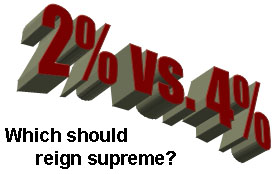
But what I don’t know is whether history really supports that view. Aside from episodes of hyperinflation, which aren’t really germane to our situation, do inflation targets higher than 2% often lead to an inflationary spiral? In America, the obvious historical episode is the high inflation of the 70s, but that had a variety of causes, and it’s not clear that inflation targeting (implicit in this case, since the U.S. Fed doesn’t have an explicit target) had anything to do with it.

Anyway, comments welcome. It’s obvious that a higher inflation target right now would probably be a pretty useful thing, but how about as a general policy? Would markets go crazy, convinced that the Fed would keep raising the target whenever the economy needed a bump? Or would they shrug after a while and just revert to all of their usual non-inflation-related pathologies? My guess is the latter, but what do I know?
BEFORE YOU CLICK AWAY!

December is make or break for us. A full one-third of our annual fundraising comes in this month alone. A strong December means our newsroom is on the beat and reporting at full strength. A weak one means budget cuts and hard choices ahead.

The December 31 deadline is closing in fast. To reach our $400,000 goal, we need readers who’ve never given before to join the ranks of MoJo donors. And we need our steadfast supporters to give again today—any amount.

Managing an independent, nonprofit newsroom is staggeringly hard. There’s no cushion in our budget—no backup revenue, no corporate safety net. We can’t afford to fall short, and we can’t rely on corporations or deep-pocketed interests to fund the fierce, investigative journalism Mother Jones exists to do.

That’s why we need you right now. Please chip in to help close the gap.

BEFORE YOU CLICK AWAY!

December is make or break for us. A full one-third of our annual fundraising comes in this month alone. A strong December means our newsroom is on the beat and reporting at full strength. A weak one means budget cuts and hard choices ahead.

The December 31 deadline is closing in fast. To reach our $400,000 goal, we need readers who’ve never given before to join the ranks of MoJo donors. And we need our steadfast supporters to give again today—any amount.

Managing an independent, nonprofit newsroom is staggeringly hard. There’s no cushion in our budget—no backup revenue, no corporate safety net. We can’t afford to fall short, and we can’t rely on corporations or deep-pocketed interests to fund the fierce, investigative journalism Mother Jones exists to do.

That’s why we need you right now. Please chip in to help close the gap.

We Recommend

Latest

Sign up for our free newsletter

Subscribe to the Mother Jones Daily to have our top stories delivered directly to your inbox.

Get our award-winning magazine

Save big on a full year of investigations, ideas, and insights.

Subscribe

Support our journalism

Help Mother Jones' reporters dig deep with a tax-deductible donation.

Donate