Remembering Hurricane Pam

Get your news from a source that’s not owned and controlled by oligarchs. Sign up for the free Mother Jones Daily.


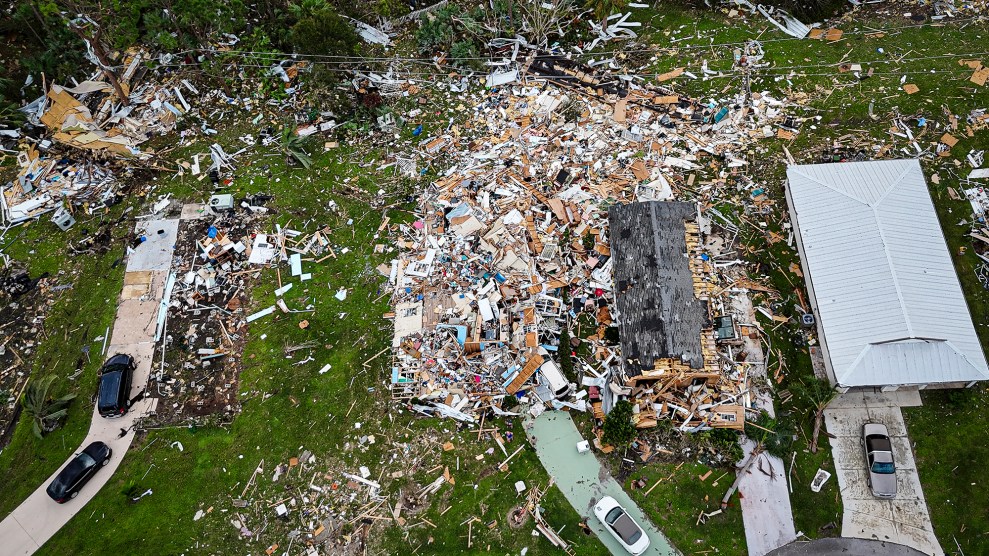
Hurricane Pam, a slow-moving Category 3 storm, hit New Orleans with 120 mph winds. Twenty inches of rain fell in some places, and the storm surge topped the levees. Over a million residents evacuated, and between 500,000 and 600,000 buildings were destroyed. Some say that 60,000 people died; others say the death toll was between 25,000 and 100,000.

If you’re trying to figure out why you’ve never heard of Hurricane Pam, let me explain: Unless you work for FEMA or live in Louisiana, you couldn’t be expected to know about it. Hurricane Pam was a hypothetical storm created for a 2004 tabletop exercise done by FEMA and Louisiana officials. The Hurricane Pam scenario involved thirteen parishes, and launched an action plan that included, among other things:

*The establishment of 1,000 shelters, 784 of which were immediately identified

*The identification of resources to support these shelters for 100 days

*A plan for replenishing resources after a 3 to 5 day period

*The identification of search and rescue personnel

*The establishment of a plan to remove people from harm’s way–it was estimated that 100,000 in New Orleans would not have cars

*The implementation of an immunization program

*Obtaining emergency preparedness relief staff

*A plan for getting supplies to hospitals and getting patients to temporary medical units

*Establishing a system for debris removal

*Development and staffing of temporary schools

Hurricane Pam was deemed a success by everyone who attended the exercise. Hurricane Katrina, a fast-moving storm which shifted from a Category 5 to a Category 4 and moved eastward right before it landed, did not match Pam on paper, but its results were very similar. What was different was the implementation of the plan, which fell apart when a real storm landed on the Gulf Coast.


BEFORE YOU CLICK AWAY!

December is make or break for us. A full one-third of our annual fundraising comes in this month alone. A strong December means our newsroom is on the beat and reporting at full strength. A weak one means budget cuts and hard choices ahead.

The December 31 deadline is closing in fast. To reach our $400,000 goal, we need readers who’ve never given before to join the ranks of MoJo donors. And we need our steadfast supporters to give again today—any amount.

Managing an independent, nonprofit newsroom is staggeringly hard. There’s no cushion in our budget—no backup revenue, no corporate safety net. We can’t afford to fall short, and we can’t rely on corporations or deep-pocketed interests to fund the fierce, investigative journalism Mother Jones exists to do.

That’s why we need you right now. Please chip in to help close the gap.

BEFORE YOU CLICK AWAY!

December is make or break for us. A full one-third of our annual fundraising comes in this month alone. A strong December means our newsroom is on the beat and reporting at full strength. A weak one means budget cuts and hard choices ahead.

The December 31 deadline is closing in fast. To reach our $400,000 goal, we need readers who’ve never given before to join the ranks of MoJo donors. And we need our steadfast supporters to give again today—any amount.

Managing an independent, nonprofit newsroom is staggeringly hard. There’s no cushion in our budget—no backup revenue, no corporate safety net. We can’t afford to fall short, and we can’t rely on corporations or deep-pocketed interests to fund the fierce, investigative journalism Mother Jones exists to do.

That’s why we need you right now. Please chip in to help close the gap.

We Recommend

Latest

Sign up for our free newsletter

Subscribe to the Mother Jones Daily to have our top stories delivered directly to your inbox.

Get our award-winning magazine

Save big on a full year of investigations, ideas, and insights.

Subscribe

Support our journalism

Help Mother Jones' reporters dig deep with a tax-deductible donation.

Donate