Ultrasound Kills Red Tides

Wikimedia Commons

Get your news from a source that’s not owned and controlled by oligarchs. Sign up for the free Mother Jones Daily.


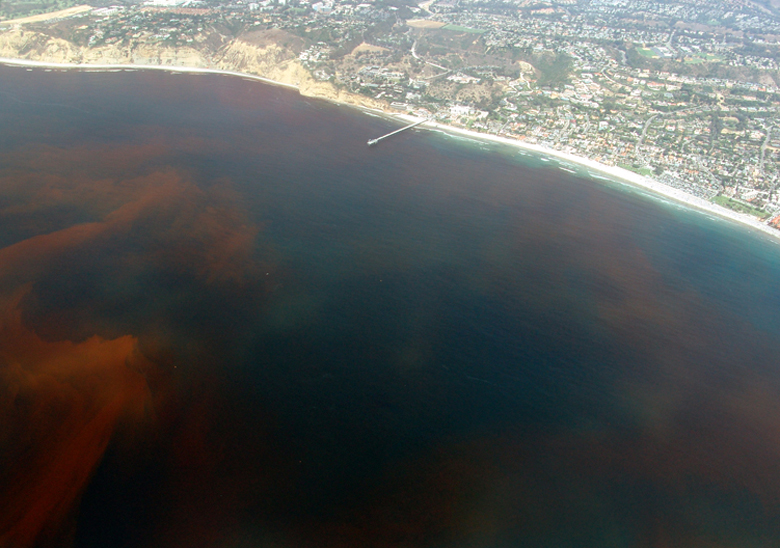
Dangerous red tides that kill fish and marine mammals and are toxic, even carcinogenic, to humans, might be destroyed using bursts of ultrasound.

Researchers at the U of Hull in the UK experimented with ultrasound on a species of algae that can cause respiratory disease and liver cancer in humans, reports New Scientist.

The team tested three frequencies of ultrasound on Anabaena sphaerica. All worked, though the 1-megahertz band was most effective—probably by bursting the buoyancy cells filled with nitrogen that keep the algae afloat.

Of course, you’ve got to ask what else the sound might be killing.

In response: The researchers believe ultrasound could be targeted to individual species of algae and the resonant frequency of their buoyancy cells. In theory, this wouldn’t damage regular plant cells, which are relatively impervious to pressure waves.

These high frequencies are also absorbed rapidly in water. At 1 megahertz the effective radius is less than 60 feet. That’s good in that it limits the affected zone but bad in that it would be a lot of work to cover a big bloom.

The study also doesn’t acknowledge—as far as I can tell—the fact that when a whole bunch of algae die and sink to the bottom they fuel a bloom of decomposers who suck up all the available oxygen in the water—turning a red tide into a dead zone.

Hmm.

Still, it might be a way to nip a bloom in the bud. Though we still need to tackle all those annoying onshore factors that grow red tides in the first place, like fertilizer and manure run-off from abusively unsustainable agricultural practices.

The paper’s in Applied Acoustics.

 

BEFORE YOU CLICK AWAY!

December is make or break for us. A full one-third of our annual fundraising comes in this month alone. A strong December means our newsroom is on the beat and reporting at full strength. A weak one means budget cuts and hard choices ahead.

The December 31 deadline is closing in fast. To reach our $400,000 goal, we need readers who’ve never given before to join the ranks of MoJo donors. And we need our steadfast supporters to give again today—any amount.

Managing an independent, nonprofit newsroom is staggeringly hard. There’s no cushion in our budget—no backup revenue, no corporate safety net. We can’t afford to fall short, and we can’t rely on corporations or deep-pocketed interests to fund the fierce, investigative journalism Mother Jones exists to do.

That’s why we need you right now. Please chip in to help close the gap.

BEFORE YOU CLICK AWAY!

December is make or break for us. A full one-third of our annual fundraising comes in this month alone. A strong December means our newsroom is on the beat and reporting at full strength. A weak one means budget cuts and hard choices ahead.

The December 31 deadline is closing in fast. To reach our $400,000 goal, we need readers who’ve never given before to join the ranks of MoJo donors. And we need our steadfast supporters to give again today—any amount.

Managing an independent, nonprofit newsroom is staggeringly hard. There’s no cushion in our budget—no backup revenue, no corporate safety net. We can’t afford to fall short, and we can’t rely on corporations or deep-pocketed interests to fund the fierce, investigative journalism Mother Jones exists to do.

That’s why we need you right now. Please chip in to help close the gap.

We Recommend

Latest

Sign up for our free newsletter

Subscribe to the Mother Jones Daily to have our top stories delivered directly to your inbox.

Get our award-winning magazine

Save big on a full year of investigations, ideas, and insights.

Subscribe

Support our journalism

Help Mother Jones' reporters dig deep with a tax-deductible donation.

Donate