How Bad Is Pepper Spray?

Get your news from a source that’s not owned and controlled by oligarchs. Sign up for the free Mother Jones Daily.


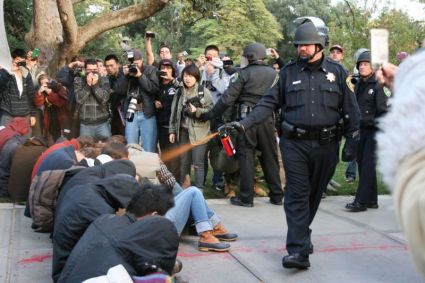
This horrifying video of UC Davis police indiscriminately pepper-spraying peaceful student protesters has gone viral. Two officers have been placed on leave. But for anyone who’s never been pepper sprayed, it’s hard to imagine exactly what it feels like. Over at Scientific American, Deborah Blum makes a valiant attempt to explain.

Using a scale of intensity developed 100 years ago by Wilbur Scoville, Blum notes that commercial-grade pepper spray is 1,000 times “hotter” than a jalapeño pepper. Most sprays are between 2 million and 5.3 million Scoville units—and the higher-end figure is the type police use. Here’s the chart:
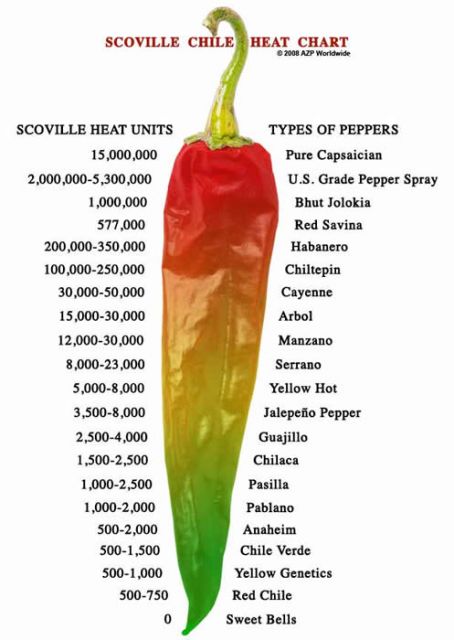
As Blum notes, getting sprayed in the face isn’t at all like putting too much hot sauce on your burrito:

The reason pepper-spray ends up on the Scoville chart is that – you probably guessed this – it’s literally derived from pepper chemistry, the compounds that make habaneros so much more formidable than the comparatively wimpy bells. Those compounds are called capsaicins and – in fact – pepper spray is more formally called Oleoresin Capsicum or OC Spray.

But we’ve taken to calling it pepper spray, I think, because that makes it sound so much more benign than it really is, like something just a grade or so above what we might mix up in a home kitchen. The description hints maybe at that eye-stinging effect that the cook occasionally experiences when making something like a jalapeno-based salsa, a little burn, nothing too serious.

Until you look it up on the Scoville scale and remember, as toxicologists love to point out, that the dose makes the poison. That we’re not talking about cookery but a potent blast of chemistry.

Blum looks at research linking pepper spray to cardiac, respiratory, and neurological problems and even sudden death. It’s scary stuff.

BEFORE YOU CLICK AWAY!

December is make or break for us. A full one-third of our annual fundraising comes in this month alone. A strong December means our newsroom is on the beat and reporting at full strength. A weak one means budget cuts and hard choices ahead.

The December 31 deadline is closing in fast. To reach our $400,000 goal, we need readers who’ve never given before to join the ranks of MoJo donors. And we need our steadfast supporters to give again today—any amount.

Managing an independent, nonprofit newsroom is staggeringly hard. There’s no cushion in our budget—no backup revenue, no corporate safety net. We can’t afford to fall short, and we can’t rely on corporations or deep-pocketed interests to fund the fierce, investigative journalism Mother Jones exists to do.

That’s why we need you right now. Please chip in to help close the gap.

BEFORE YOU CLICK AWAY!

December is make or break for us. A full one-third of our annual fundraising comes in this month alone. A strong December means our newsroom is on the beat and reporting at full strength. A weak one means budget cuts and hard choices ahead.

The December 31 deadline is closing in fast. To reach our $400,000 goal, we need readers who’ve never given before to join the ranks of MoJo donors. And we need our steadfast supporters to give again today—any amount.

Managing an independent, nonprofit newsroom is staggeringly hard. There’s no cushion in our budget—no backup revenue, no corporate safety net. We can’t afford to fall short, and we can’t rely on corporations or deep-pocketed interests to fund the fierce, investigative journalism Mother Jones exists to do.

That’s why we need you right now. Please chip in to help close the gap.

We Recommend

Latest

Sign up for our free newsletter

Subscribe to the Mother Jones Daily to have our top stories delivered directly to your inbox.

Get our award-winning magazine

Save big on a full year of investigations, ideas, and insights.

Subscribe

Support our journalism

Help Mother Jones' reporters dig deep with a tax-deductible donation.

Donate